



N°0025 · Generation 1
Pikachu
Pikachu greet each other by rubbing their tails together and running electric current through them.
Share this Pokémon
Characteristics
- Height:
- 0.40
- Weight:
- 6.00
- Gender differences:
- Yes
Base stats
Total: 320Combat strengths and weaknesses
Damage multiplier taken by Pikachu depending on the attacking move's type. ×2 and ×4 are the attacks to avoid.
Weaknesses - dangerous attacks

Resistances - weak attacks


The complete Pokédex, in your pocket
Detailed pages, types, stats and your favourite Pokémon - on the app.
Evolutions



Forms
Forms available in your language are clickable. The others show their stats below.
Additional information
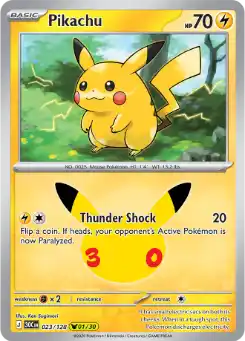
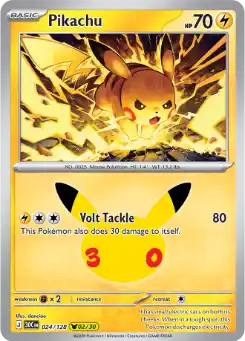
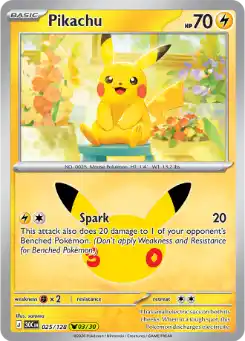
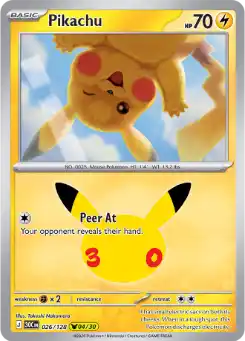
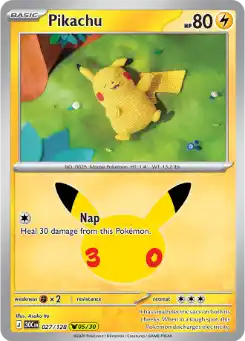
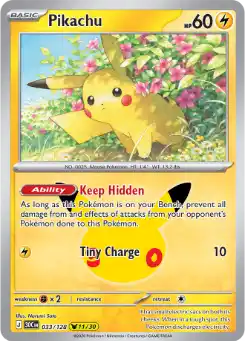
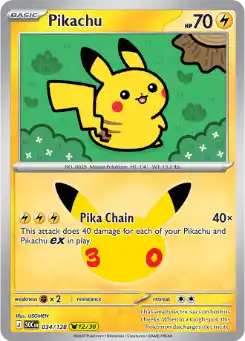
Pokémon Cards (181)
Showing the latest 12

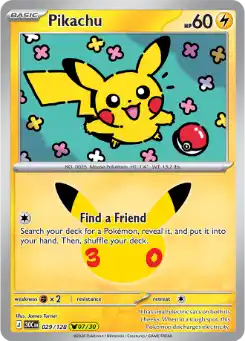
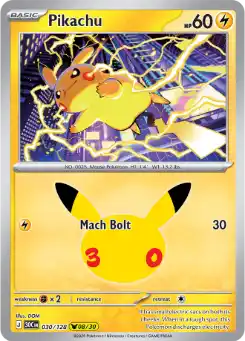
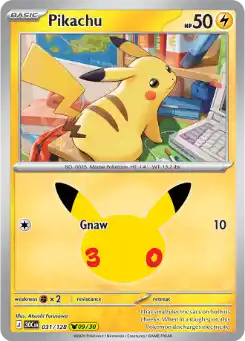
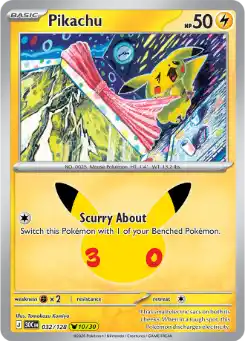
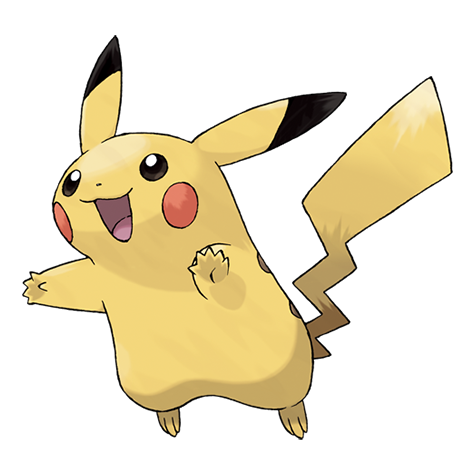
Official artwork
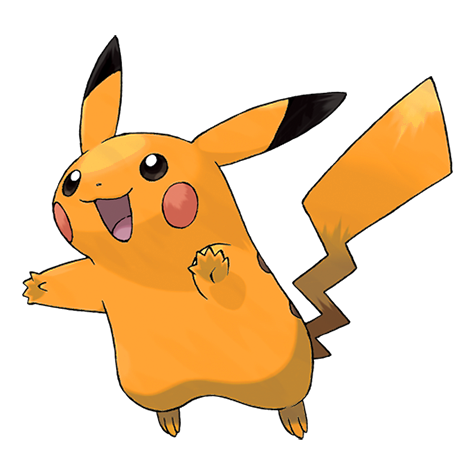
Base sprites


Pokémon Home

Dream World

Showdown


Detailed information
Introducing Pikachu
Pikachu is without a doubt the most famous Pokémon in the world. Present since the first generation, it has become the true symbol of the franchise, to the point of being recognized even by people who have never played a Pokémon game. In the Pokédex, Pikachu is described as a Mouse Pokémon of the Electric type, capable of storing electricity in its cheeks and releasing it as shocks. This page aims to bring together all the essential information on Pikachu: its base characteristics, its moves, its evolutions, its place in the different games, as well as its role in the anime, films, cards, and pop culture.
Over time, Pikachu has become far more than a simple playable character: it represents the spirit of the Pokémon adventure. It can be found alongside trainer Ash in the animated series, on movie posters, in fighting games like Smash, in merchandise, amiibo, spin-off games like Detective Pikachu, and in countless special events. This popularity is explained by its simple and endearing design, its compact body, its lightning bolt-shaped tail, its courageous temperament, and its high battle Speed.
In the main games, Pikachu is not always the most powerful Pokémon, but it remains an excellent example of a balanced Pokémon for understanding the basics of the Electric type: moves like Thunder Shock and Thunderbolt, Speed management, offensive coverage against Water and Flying types, and the importance of compensating for defensive fragility. Whether in Red and Blue, in more recent games set in Kalos, or in modern remakes, Pikachu often holds a special place, with appearances, events, and alternate forms (like Pikachu with a cap) regularly put forward.
Description and Origins of Pikachu
General Description
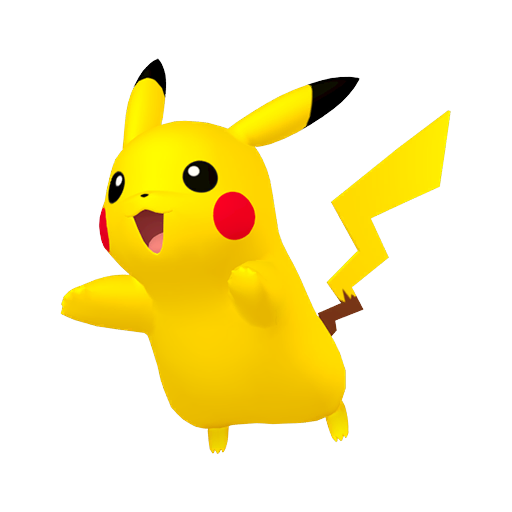
Pikachu is a Pokémon of small stature, with a round body and short limbs. It resembles a small yellow mouse, with long black-tipped ears, large expressive eyes, and very characteristic round red cheeks. These cheeks contain pouches of electricity that charge over time, which it can release as a Thunder Shock attack or more powerful discharges like Thunderbolt. Its tail, in the shape of a zigzag resembling a lightning bolt, further reinforces its association with the Electric type.
In terms of size and weight, Pikachu is relatively light, generally only a few kg, which is consistent with its agile silhouette. Its high battle Speed is coherent with this appearance: it dodges quickly, leaps, dashes, and strikes with fast Electric attacks. This combination of small size, constant movement, and electricity makes it an immediately identifiable character in the Pokémon world.
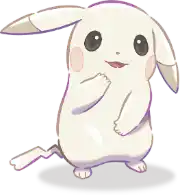
Some details vary depending on whether it is a male or female Pikachu. For example, the shape of the tail can be slightly different in females, often depicted with a heart-shaped tip. These visual variations add a touch of personality without changing the Pokémon's base abilities. In several games, these differences are visible in menus, in battles, and even in certain episode or event scenes.
Name Origin and Foreign Versions
The name Pikachu is identical in many languages, which is rare for a Pokémon. It comes directly from the Japanese ピカチュウ (Pikachu). In Japanese, "pika" evokes a spark or flash of light, while "chu" is the onomatopoeia associated with the cry of a small mouse. The name thus perfectly reflects the concept of an "electric mouse." In Pokédex entries, this idea of a small Pokémon capable of producing electricity from its cheeks is a recurring theme.
As the franchise mascot, Pikachu's name has changed very little across different regions of the world. This choice reinforces the consistency of the Pokémon's image: whether talking about Japan, Europe, or other countries, "Pikachu" immediately evokes the same character — a small yellow Pokémon, fast, friendly but formidable in battle when properly trained.
General Characteristics in the Pokédex
Number, Generation, and Appearances
Pikachu belongs to the first generation of Pokémon and appears very early in the National Pokédex, making it one of the first Electric Pokémon players discover. In Red and Blue, it is already available in certain specific areas, even if it is not always the easiest Pokémon to find at the start. In Yellow, it takes on an even more central role, following the trainer on the map and responding to events in the adventure, directly reflecting the original anime episode.
Over the years, Pikachu has appeared in nearly every region: Kanto, Johto, Hoenn, Sinnoh, Unova (Black and Black 2), Kalos, Alola, Galar, and beyond. Each new region, such as Kalos in X and Y, reintroduces it with new Pokédex entries, slightly different habitats, and sometimes new events or special forms. It often appears in forested areas, near routes, sometimes in places where electricity is present (power plants, train lines, etc.).
Outside the main games, Pikachu has an impressive number of appearances in spin-offs: Pokémon Stadium, Pokémon Snap, Pokémon Unite, Detective Pikachu, Pokémon Smash/Smash Bros, and many others. Each of these appearances reinforces its status as a central character in the entire Pokémon adventure, regardless of the game genre (fighting, puzzle, adventure, detection, etc.).
Size, Weight, and Pokédex Description
In the various Pokédex entries, Pikachu is generally described as a small and lightweight Pokémon in kg. This lightness allows it to move quickly, jump onto trainers' shoulders, slip into tight spaces, or hide in tall grass. Its general shape remains consistent from one game to the next: a small Mouse Pokémon with bright yellow fur, with black or dark brown tips on its tail and ears.
Descriptions often highlight its electricity-filled cheeks. Several entries explain that Pikachu stores this electrical energy during sleep or when it is not using an attack, and releases it as lightning bolts when surprised, angry, or when pulled by its tail. This ability is at the core of its identity: it is literally a living electric generator.
Type, Base Stats, and Battle Role
Electric Type and Interactions
Pikachu is a pure Electric-type Pokémon. This type gives it a specific set of strengths and weaknesses. It is particularly effective against Water and Flying-type Pokémon, making it an excellent partner in many teams, especially in battles against Gym Leaders or groups of Pokémon that use these types. An attack like Thunder Shock or Thunderbolt can then deal very significant damage, potentially knocking out an opponent in a single hit if Pikachu's level and power are high enough.
In return, the Electric type is generally vulnerable to Ground-type attacks. Pikachu must therefore be very careful against Pokémon capable of using moves like Earthquake or Dig, at the risk of taking massive damage. Its base Defense is not very high, meaning it does not hold up well against heavy physical hits, especially when they are super effective.
Base Stats, Attack, and Speed
Pikachu's base statistics are designed to make it a fast and offensive Pokémon. Its Speed is one of its main strengths: in many games, it strikes before the majority of Pokémon encountered in the wild or in the main story. This allows it to launch its Electric attacks before taking damage, which can change the outcome of a battle from the very first turn.
Its Special Attack and physical Attack are respectable for a Pokémon of this category, but its Defense and HP remain relatively modest. It is not a tank, but a fragile attacker that needs to strike fast and accurately. With a good EV spread and a suitable nature, Pikachu can reach a very interesting offensive power level, particularly when using STAB Electric attacks.
Moves and Abilities of Pikachu
Moves Learned by Level-Up
Through level-up, Pikachu learns a set of moves centered on electricity and support moves. Early abilities include Thunder Shock, which is often the first effective Electric attack, followed by more powerful moves like Thunderbolt or Thunder in some versions. These attacks allow it to fully exploit its charged cheeks, creating the iconic image of Pikachu launching a lightning bolt on the battlefield.
In addition to its Electric attacks, Pikachu can learn moves like Tackle, Quick Attack, or moves that improve or modify the flow of battle — for example, by increasing its Speed or reducing the opponent's stats. Intelligent use of these moves can offset its fragility, allowing it to gain the upper hand before the opponent can respond.
TMs, HMs, and Additional Moves
Thanks to TMs, Pikachu can further expand its move pool. Depending on the version, it can learn Normal, Fighting, or even very useful support moves. Some TMs increase its offensive coverage, giving it the ability to hit Pokémon that resist the Electric type, while others boost its longevity in battle or its stats.
In some games, Pikachu can also receive special moves via events, distributions, move tutors, or particular items. These moves can include exclusive attacks, tied to a special episode, a film, or a new edition of the game. These "event" Pikachu sometimes become collector's items in fans' teams, in addition to being playable.
Evolution: From Pichu to Raichu
Pre-Evolution Pichu and Evolution into Pikachu
In the early versions, Pikachu is often presented as a base Pokémon. But starting from certain generations, a pre-evolved Pokémon named Pichu was introduced. Pichu is the pre-evolution of Pikachu: an even smaller Pokémon with a childlike design, which evolves into Pikachu through a high level of friendship with its trainer. This evolution emphasizes the relationship between the player and their Pokémon, a central theme in the franchise.
Once Pichu evolves, Pikachu becomes the "middle" form of this evolutionary line, but remains often considered the most iconic form. Many trainers choose to keep Pikachu in this form rather than evolving it, notably to stay faithful to the image of Ash's companion in the animated series.
Evolution into Raichu
Pikachu can evolve into Raichu when exposed to a Thunder Stone. Raichu represents the classic final form of this evolutionary line, with higher base stats, particularly in Attack and Speed. In some games, one can also obtain an Alolan Raichu, of the Electric/Psychic type, offering a new tactical approach in battle.
From a strategic standpoint, evolving Pikachu into Raichu allows gaining in raw power, at the cost of abandoning Pikachu's original design. Many fans choose to keep Pikachu as it is for aesthetic or sentimental reasons, while others evolve it as soon as possible to optimize their team's stats. This choice depends on play style, the ongoing adventure, and the trainer's objectives.
Pikachu in the Main Games
Pikachu in the Early Generations: Red, Blue, Yellow
In Red and Blue, Pikachu can be caught in certain areas and quickly becomes an appreciated ally for its ability to defeat Water and Flying-type Pokémon. In Yellow, it takes an even more central role: it follows the player on the map, does not stay in a Poké Ball, and reacts to events in the adventure. This mechanic directly reflects the anime, where Pikachu refuses to stay in its Poké Ball and accompanies Ash everywhere.
These early appearances shaped Pikachu's image as a faithful partner, always ready to enter battle alongside its trainer. They also allowed players to become familiar with the Electric type and with how to use Speed and attack precision rather than simple brute force.
Pikachu in Later Generations and in Kalos
In subsequent generations, Pikachu remains omnipresent. It is often available in most games, whether by direct capture, special events, or through trades. In regions like Kalos, it is found in natural areas, sometimes in groups (or by "hordes" in certain mechanics), reinforcing the idea that many Pikachu exist in the Pokémon world.
With each new generation, adjustments may be made to its stats, moves, or abilities, but its overall role remains the same: a fast, offensive Pokémon perfectly suited to players who want an iconic companion, easy to recognize and enjoyable to use in battle. New versions sometimes add specific items or dedicated events, such as Pikachu with caps or distributions to celebrate an anniversary, a film release, or franchise news.
Pikachu in the Anime, Films, and Pop Culture
Pikachu in the Animated Series
In the animated series, Pikachu has been Ash's main partner since the very first episode. Their relationship is at the heart of the adventure: they travel through different regions, challenge Gym Leaders, leagues, Team Rocket, and many other enemies. Pikachu is portrayed as a courageous, sometimes stubborn Pokémon, but deeply attached to its trainer. It refuses to evolve into Raichu, which reinforces its image as the "definitive" Pikachu for many fans.
This constant exposure means Pikachu is known across multiple age groups: from children discovering Pokémon for the first time to adults who grew up with the first games and first seasons. Every time a new region is introduced, Pikachu is there, participating in battles, using its Electric attacks like Thunderbolt or Iron Tail, and demonstrating that despite its cute appearance, it remains a serious opponent.
Films, Spin-offs, and Detective Pikachu
Pikachu is also the star of many Pokémon films, whether animated or hybrid films like Detective Pikachu. In the latter, it appears in a more realistic form, with detailed fur and a very pronounced personality, while retaining its electric cheeks and lightning bolt tail. This film further broadened its audience by reaching people who do not necessarily follow the games or series.
In fighting games like Super Smash Bros., Pikachu is a recurring playable character. It uses moves like Thunder Shock, Thunderbolt, and other moves inspired by its abilities in the main games. Its combination of Speed and mobility makes it a formidable fighter in the hands of an experienced player, and a popular choice in tournaments.
Pikachu in Pokémon Cards and Merchandise
Pikachu Pokémon Cards
Pikachu appears on a considerable number of Pokémon cards. Some Pikachu cards are very simple, aimed at beginner decks, with basic moves like Thunder Shock or Tackle, while others, rarer, feature special illustrations, more powerful attacks, or unique game effects. Certain special, anniversary, or film-tied editions offer Pikachu with particular designs, sometimes with a cap or an iconic backdrop.
The value of these cards varies enormously depending on their rarity, condition, original set, and collector demand. For many fans, owning at least one Pikachu card is almost a rite of passage, as it symbolizes the entire franchise. Online tables and guides list many card versions, sorted by generation, edition, or special series.
Merchandise, Amiibo, and Toys
Beyond cards, Pikachu is omnipresent in merchandise: plush toys, figures, clothing, accessories, backpacks, phone cases, and much more. Nintendo has also produced Pikachu amiibo, allowing content to be unlocked in certain games. Pikachu can also be found as a mascot at events around the world, sometimes in the form of large costumes at parades or festivals.
This massive presence in merchandise makes Pikachu an ambassador of the Pokémon world in real life. It represents both the nostalgia of the first Game Boy games and the novelties announced in news and updates, reinforcing its status as a timeless icon of the series.
Breeding, Egg Groups, and Raising
Egg Groups and Breeding
In games that include the breeding mechanic, Pikachu belongs to egg groups that often include Fairy, Electric, or similarly shaped Pokémon. By placing it in the Day Care with a compatible partner, it is possible to obtain eggs that hatch into Pichu, recalling its pre-evolution. This allows trainers to create complete lineages, select the best IVs, and obtain optimal natures.
Breeding also allows passing down certain moves to Pichu, which it will retain once evolved into Pikachu, and then into Raichu. This approach is common among advanced players who want to optimize their Pikachu's stats, particularly for Speed and Special Attack.
Strategic Interest of Breeding
On the strategic side, breeding Pikachu allows combining a good nature, a well-thought-out EV distribution, high IVs, and a move set tailored to a specific role: special attacker, mixed attacker, or fast support. Even if Pikachu does not always top competitive rankings, it can surprise in certain formats, especially when it benefits from specific items or particular rules.
For players who value style and emotional bond with their Pokémon above all, breeding also serves to create their "perfect" Pikachu, one they will keep for years across different game generations.
Strategic Tips for Using Pikachu
Pikachu in the Solo Campaign
In the solo campaign, Pikachu is an excellent ally against Gym Leaders and trainers who use Water or Flying-type Pokémon. With moves like Thunder Shock or Thunderbolt, it can turn a battle around in a few turns, as long as it avoids Ground-type attacks or overly powerful physical hits. Its Speed often allows it to attack first, which is very valuable in important battles.
To make the most of Pikachu, it is recommended to give it items that boost its Electric attacks or increase its survivability, and to fill out its set with at least one non-Electric move to handle Pokémon that resist that type. In a well-built team, Pikachu plays the role of a fast attacker, ideal for finishing off weakened opponents or opening a battle with a powerful lightning strike.
Pikachu in Advanced Strategy
In advanced strategy, Pikachu is sometimes used in specific formats, fun leagues, or themed competitions (such as teams made up exclusively of Kanto Pokémon or mascot Pokémon). Its defensive weakness remains a problem, but its Speed, its versatility in terms of moves, and its unpredictability can make it dangerous if the opponent is not paying attention.
Sets based on special items, surprise moves, or particular tournament rules allow Pikachu to express its potential without necessarily competing with the most optimized Pokémon. For many players, using it in battle is first and foremost a matter of enjoyment and style, more than a pursuit of absolute performance.
Pikachu is far more than a simple base Pokémon: it is the icon of an entire franchise, a symbol of adventure, of the bond between trainer and Pokémon, and an indispensable character of modern pop culture. With its small yellow mouse design, its electric cheeks, its lightning bolt tail, its high Speed, and its moves like Thunder Shock or Thunderbolt, it has won the hearts of several generations of players and viewers.
Summary
This page has brought together the key information about Pikachu: base characteristics, type, stats, moves, evolutions (from Pichu to Raichu), role in the main games, place in the anime, films, cards, merchandise, breeding, and strategic tips. Whether you have been playing since the first Game Boy versions or are discovering the Pokémon world through modern games, Pikachu remains an ideal companion — familiar and always enjoyable to use.
In a world where new Pokémon appear with each generation, Pikachu remains a reliable constant: an accessible, effective, and charismatic Pokémon that reminds us with every battle why the Pokémon series continues to captivate millions of players around the world.
