



N°0010 · Generation 1
Caterpie
Its small suction-cup feet let it climb slopes and walls without tiring.
Share this Pokémon
Characteristics
- Height:
- 0.30
- Weight:
- 2.90
Base stats
Total: 195Combat strengths and weaknesses
Damage multiplier taken by Caterpie depending on the attacking move's type. ×2 and ×4 are the attacks to avoid.


Resistances - weak attacks


The complete Pokédex, in your pocket
Detailed pages, types, stats and your favourite Pokémon - on the app.
Evolutions

Additional information
Pokémon Cards (17)
Showing the latest 12







Official artwork

Base sprites


Pokémon Home
Dream World

Showdown


Detailed information
Introducing Caterpie
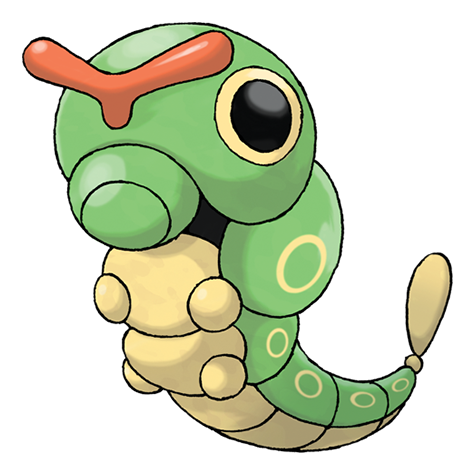
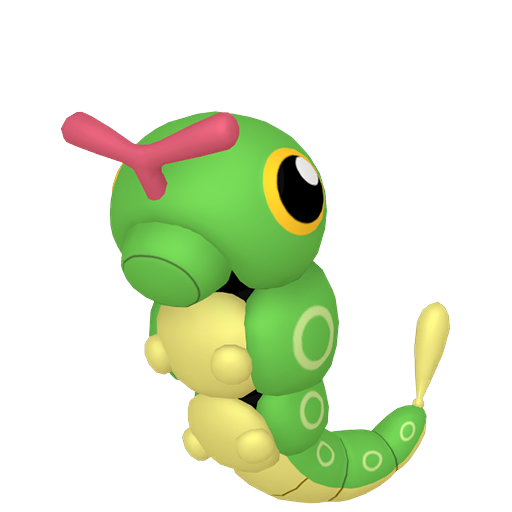
Caterpie, known as Chenipan in French and キャタピー in Japanese, is one of the first Pokémon that players encounter in the Kanto region. This small Bug-type worm appears very early in the Pokédex (No. 010) and is one of the iconic creatures of the first generation. Its modest size, its light green body and its large red antennae give it an endearing look, ideal for introducing beginners to the capture and evolution system.
At just a few dozen centimeters long and a weight of about 2.9 kg, Caterpie is a physically fragile Pokémon but a very interesting one from a teaching standpoint. It lets you quickly understand how levels, EVs and progression work in the games, since it evolves into Metapod and then Butterfree at a relatively low level. Its presence on the first routes and in Viridian Forest makes it a frequent companion of early Kanto teams.
Characteristics of Caterpie
Caterpie's official description across the various games emphasizes its lifestyle close to nature. It spends most of its time eating leaves, moving slowly along tree trunks and tall grass. Its body is segmented, each segment protected by an elastic skin. Its large black eyes give it a naive look, but it remains constantly on guard against predators.
Its main defense lies in a foul-smelling substance that it can secrete from its antennae. When an enemy comes too close, it releases this odor to drive it away. On the stat side, Caterpie has relatively low HP and defense, limited attack and average speed. It is a base Pokémon designed to evolve quickly rather than to dominate battles early in the adventure.
In Pokémon Red, Blue, Yellow, but also in the FireRed and LeafGreen remakes, it is found notably on Route 2 and in Viridian Forest. In Diamond, Pearl, Platinum or even HeartGold and SoulSilver, its appearances are often tied to wooded areas, contests or special parks, recalling its close link with the natural environment.
Evolution: how to evolve Caterpie
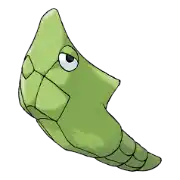
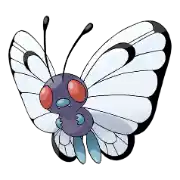
One of Caterpie's main appeals is the speed of its evolution cycle. It evolves into Metapod as early as level 7, then into Butterfree at level 10. This ultra-fast progression lets new players experience very early the feeling of evolving a Pokémon and unlocking more powerful abilities.
To evolve Caterpie, you simply have to take part in a few battles in the first areas or place it at the head of the team so that it gains experience. It can also benefit from the Exp. Share in the more recent versions, which makes its training even easier. Once it has turned into Metapod, it becomes more resistant thanks to a better defense, but it remains limited offensively until its transformation into Butterfree.
When it comes to breeding, Caterpie belongs to the Bug egg group. By leaving Butterfree or other compatible Pokémon at the Day Care, it is possible to obtain Caterpie eggs. This lets players work on EVs, individual values (IVs) and nature to create optimized Butterfree lines as early as the first generation.
Using Caterpie in the games
While Caterpie is not meant to stay long on a competitive team, it plays a very important role in the early games. It helps you understand the mechanics of capture, type, weakness and progression. It can also serve as support in the first gyms, especially if the player chooses to evolve it quickly.
Caterpie in Pokémon Go
In Pokémon GO, Caterpie appears in grassy areas, parks and sometimes during events dedicated to the first generation. Its capture is relatively easy thanks to a very low flee rate. As in the main games, it evolves quickly into Metapod and then Butterfree through the use of Caterpie candies, which makes it handy for accumulating trainer experience.
In this mobile game, Caterpie has a fast Bug-type move and a few basic charged moves. Its maximum power (max CP) remains limited, which makes it a Pokémon better suited to completing a Pokédex or serving as support in the early account levels. Nevertheless, some players enjoy keeping a Butterfree obtained from a Caterpie caught in a particular area, as a memento of an event or a specific place.
Battle strategies with Caterpie
In battle, Caterpie mainly has simple abilities like Tackle and Growl. With its weak attack and defense, it is rarely used to win important matches. However, it can be interesting in certain challenges, such as "Bug monotype" runs or playthroughs where the player voluntarily limits themselves to base Pokémon.
In this type of challenge, the goal is to manage your resources intelligently: keep an eye on the PP count, exploit the enemies' weaknesses and take advantage of the rare occasions when Caterpie can deal decent damage. Although it does not have spectacular abilities, simply succeeding in a battle with it can be a source of pride for the most passionate trainers.
In terms of EVs, defeating wild Caterpie in certain versions can also serve to train other Pokémon on specific stats, like speed or defense. They then become a sort of "target" for training to optimize more advanced builds.
Caterpie in the media
Beyond the video games, Caterpie occupies an important place in the animated series, the films and the merchandise. Despite its modest appearance, it is associated with several memorable scenes in the Pokémon universe, particularly at the start of Ash's adventure in Kanto.
Caterpie in the Pokémon anime
In the original animated series, Caterpie is one of the first Pokémon caught by Ash. Their encounter in Viridian Forest marks a turning point: Ash proves to Misty that he is capable of a successful capture without anyone's help. Ash's Caterpie shows itself to be extremely attached to its trainer and dreams of becoming a majestic Butterfree.
This relationship is developed over several episodes, showing Caterpie and then Metapod fighting courageously despite their low power. The moment of the evolution into Butterfree is one of the most moving scenes of the first season, symbolizing the duo's progression and the promise of more ambitious battles. Later, the episode of Butterfree's farewell, in which Ash lets his Pokémon leave with a pink partner, has remained engraved in fans' memories.
Caterpie also makes a few appearances in other seasons, spin-offs and films, often in the background in forests or contests. Its presence helps reinforce the idea that the Pokémon world is populated with small "ordinary" creatures that play an essential role in the ecosystem.
Caterpie collectible cards
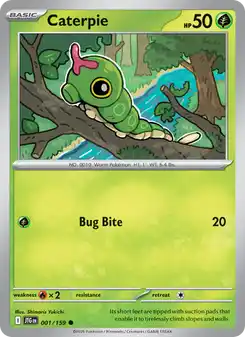
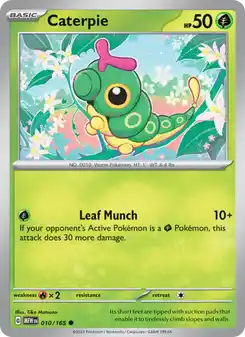
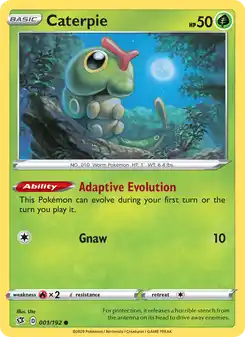
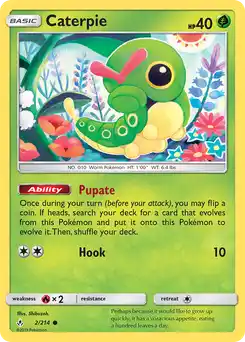
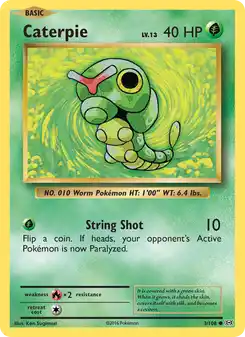
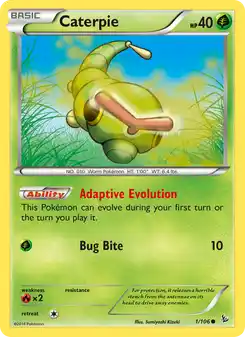
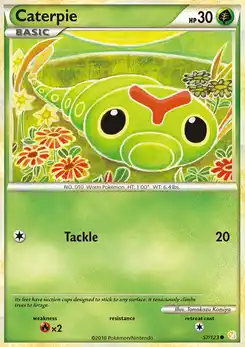
When it comes to the TCG, Caterpie appears in many Pokémon card sets dating back to the first edition. Its first card, from the Wizards Base block, depicts it crawling along a branch, with very simple stats: little HP, a low-energy-cost "Tackle" move and a weakness to the Fire type.
Over the years, other Caterpie cards have appeared in expansions such as Jungle, Neo, Diamond & Pearl, HeartGold & SoulSilver, or even more recent series. Some versions feature cute illustrations, others a more realistic touch, but all keep the idea of a small, calm and curious caterpillar.
For collectors, Caterpie cards are generally not very expensive, but certain rare editions or those in perfect condition can gain value, especially when they are graded. They remain mostly appreciated for completing themed collections centered on Butterfree, the first generation or Bug-type Pokémon.
Comparison with other Bug Pokémon
As Caterpie is one of the first Bug Pokémon encountered in Kanto, it is often compared to other similar creatures, notably Weedle, Metapod, Butterfree or even the Pokémon of Johto and Sinnoh that reuse the same evolutionary pattern.
Caterpie vs Weedle
In Pokémon Red and Blue, players can encounter either Caterpie or Weedle (or both depending on the version) in Viridian Forest. Both are base Bug-type Pokémon, with a fast progression toward a cocoon (Metapod or Kakuna) and then toward a final Pokémon (Butterfree or Beedrill).
The main difference lies in the final dual type: Butterfree becomes Bug/Psychic (or Bug/Flying with broad access to psychic abilities), while Beedrill is Bug/Poison. In practice, Butterfree tends to be more oriented toward special attack and support (Sleep Powder, Poison Powder, Stun Spore), whereas Beedrill relies on speed and physical hits (Poison Sting, Poison Jab).
For this reason, players who enjoy status moves and battlefield-control strategies often prefer Caterpie's line, while those who seek a fast, offensive Bug turn to Weedle. Aesthetically, Caterpie is generally perceived as cuter, which makes it a favorite among younger trainers.
Other similar Pokémon
Over the generations, Game Freak has often reused the model of the small Bug that evolves very fast: there are thus many "cousins" of Caterpie, such as Blipbug, Venipede, Wurmple or Sewaddle. All share weak base stats, a fast evolution and a teaching usefulness for new players.
Compared to these more recent Pokémon, Caterpie keeps a historical advantage: it is associated with the Kanto region, the memories of the first Red, Blue and Yellow cartridges, and cult moments of the anime. Even if some new Bugs have better stats or more complex abilities, Caterpie is still often chosen for "retro" or nostalgic teams.
In games like HeartGold & SoulSilver or the more recent remakes, many players continue to add Caterpie to their team at the start of the adventure, if only to relive the original experience. Its role in building the Pokémon franchise, both in-game and in the anime and merchandise, makes it a true pillar of the world of small Bug Pokémon.
