


Share this Pokémon
Characteristics
- Height:
- 1.10
- Weight:
- 15.30
Base stats
Total: 340Combat strengths and weaknesses
Damage multiplier taken by Vibrava depending on the attacking move's type. ×2 and ×4 are the attacks to avoid.


Resistances - weak attacks


Immunities - no damage taken



Your Pokédex, in cards
Every card of every Pokémon, what you already have and what you're missing.
Evolutions



Additional information
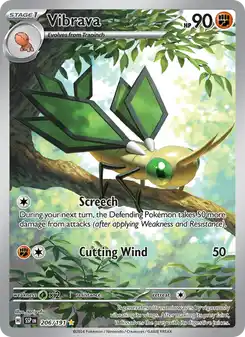
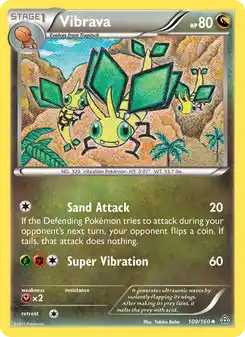
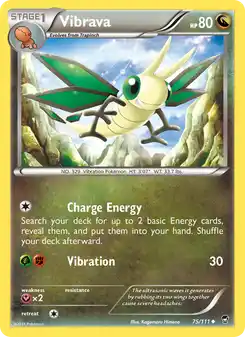
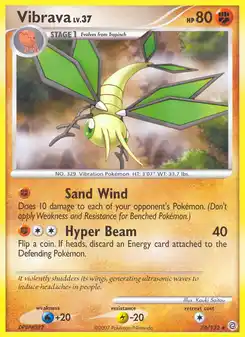
Pokémon Cards (20)
Showing the latest 12








Official artwork
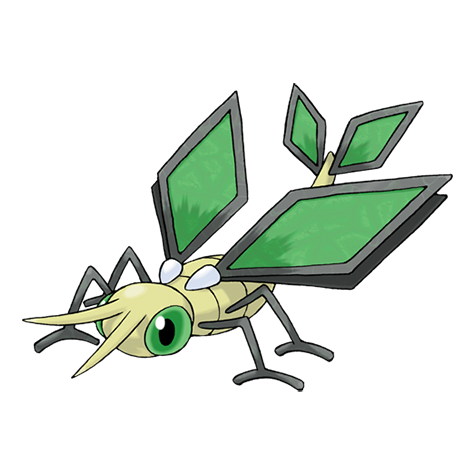
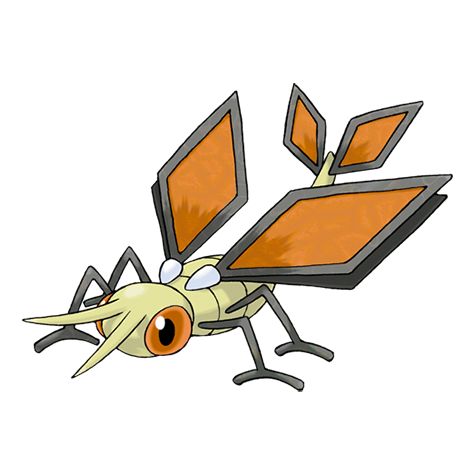
Base sprites


Pokémon Home

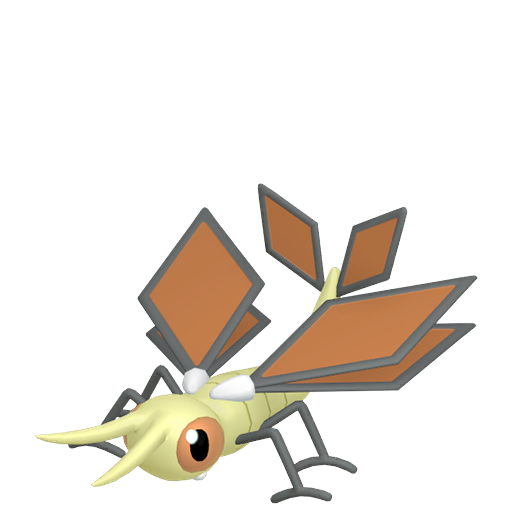
Dream World
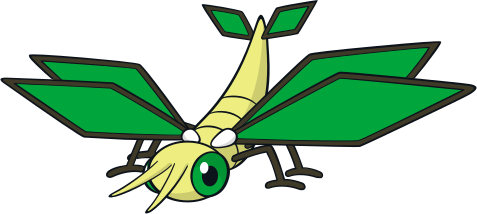
Showdown


Detailed information
Overview of Vibrava
Vibrava is a Ground and Dragon type Pokémon introduced in the Hoenn region. Its English name is Vibrava and its Japanese name is ビブラーバ. It is the direct evolution of Trapinch and serves as an essential intermediate stage before the final evolution into Flygon. Vibrava stands out for its vibrating wings, capable of producing powerful sound waves — a central element of its identity and its attacks.
In the Pokédex, Vibrava is described as a Pokémon that generates ultrasonic waves by rapidly beating its wings. These vibrations can cause headaches or disorient opponents. For players, this information is important as it explains its strategic orientation toward attacks based on speed and constant pressure.
Type and strategic weaknesses
Vibrava's Ground and Dragon typing gives it excellent offensive coverage, but also notable weaknesses. It remains vulnerable to Ice attacks, which represent a major threat in battle. Players must therefore pay attention to the opposing type and adapt their moveset accordingly.
Thanks to its dual typing, Vibrava resists Electric and Fire attacks well. This makes it an interesting choice on certain teams, particularly in double battles where its resistances can be exploited to stall or support a broader strategy.
Stats and level progression
Vibrava has a balanced stat spread oriented toward Speed and Special Attack. Its Defense is decent without being exceptional, requiring thoughtful use in battle. From level 20 onward, it becomes fully exploitable and grows in effectiveness up to level 50, where its potential peaks before evolution.
Its evolution into Flygon occurs at level 45. This threshold is important to know in order to optimize training and decide whether it is worth delaying evolution to learn certain moves exclusive to Vibrava.
Key moves and abilities
Vibrava's moves draw heavily on its vibration and ultrasonic abilities. It naturally learns moves like Bug Buzz, Dragon Breath, or Bulldoze, which take advantage of its typing and wings. These moves are particularly effective for dealing sustained damage and disrupting opponents.
Through TMs, Vibrava can expand its offensive options with moves like Earthquake, Earth Power, or Dragon Tail. This choice of moves allows players to build varied sets suited to both solo battles and raids.
Vibrava in the Pokémon Trading Card Game
In the Pokémon card game, Vibrava appears regularly as an intermediate card, often focused on fast, low-energy attacks. These cards primarily serve to set up Flygon's arrival on the field while maintaining decent offensive pressure.
The value of Vibrava cards generally remains moderate, though certain editions or special illustrations may interest collectors. For Ground or Dragon decks, Vibrava is a coherent and logical link in the evolution chain.
In-game use and practical tips
Vibrava is appreciated above all for its versatility and its ability to fit into different team compositions. In Pokémon GO or in the main games, it can be used temporarily before evolving, notably to catch poorly prepared opponents off guard.
To maximize its effectiveness, it is recommended to invest EVs in Speed and Special Attack. Its ideal nature will depend on the intended role, but an offensive approach remains the most common to fully exploit its moves and evolutionary potential.